
DEXA
You are more than a number on the scale. Discover what your body is truly made of with a DEXA scan, the gold standard for body composition assessment, at the CHAMP Center.
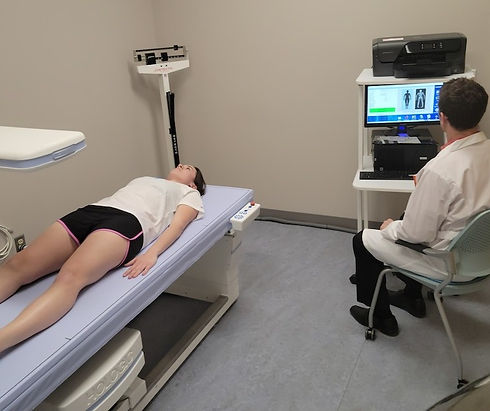
DEXA: What It Is
Dual-Energy X-Ray Absorptiometry (DEXA) is a highly accurate and practical method for assessing and analyzing whole-body composition. By passing low-dose X-ray beams through the body, DEXA differentiates between bone, lean tissue, and fat, providing precise measurements of fat mass, lean mass, bone mineral density, and regional distribution.
DEXA scans are noninvasive, painless, and typically take five to ten minutes. Participants lie on their back while a scanner passes over the body, requiring minimal movement. The assessment provides detailed insights, including body fat percentage (subcutaneous vs. visceral), lean body mass, total body mass, bone density, and regional analysis of trunk and limbs. Further preparation details can be found on the CHAMP Center Prepare Page.
At the CHAMP Center, DEXA testing is performed using the Horizon® DXA system from Hologic, a platform trusted by leading research institutions (including the Applied Science and Performance Institute), sports performance programs, and healthcare facilities worldwide.

DEXA: Why It's Important
Scale weight alone cannot distinguish between fat, lean tissue, and bone, nor reveal how mass is distributed throughout the body. DEXA provides a comprehensive, region-specific view of body composition, highlighting changes often missed by the scale. This information is essential for informed training, nutrition, and long-term health decisions.
Understanding DEXA results allows participants to:
• Determine whether priorities should focus on lean mass gain, fat loss, or both
• Identify visceral fat levels linked to metabolic and cardiovascular health
• Monitor bone density to support skeletal strength and resilience
• Detect asymmetries or regional differences that may influence performance or injury risk
• Track meaningful changes even when scale weight remains unchanged
DEXA provides a structural snapshot of the body that supports informed decisions about training, nutrition, and long-term health.

DEXA: Who Should Do It
DEXA measures lean mass, fat mass, visceral fat, and bone mineral density to provide a detailed view of body composition and skeletal health. This test benefits anyone seeking precise insights into body composition and bone health, including those who are:
-
Body Recomposition Focused: Track whether changes come from fat or muscle to guide training and nutrition.
-
Monitoring Visceral Fat: Assess deep belly fat to reduce metabolic and cardiovascular risk.
-
Prioritizing Bone Density: Monitor bone tissue before bone health risk increases.
-
Athletes or Active Individuals: Evaluate muscle development, symmetry, and recovery.
-
Focused on Longevity: Understand markers that matter with age: muscle mass, fat distribution, and bone strength.
-
Women across Life Stages: Track and understand composition changes during perimenopause and post-menopause.

DEXA: Interpreting Results
Your DEXA results offer a precise look at your body’s structural makeup, including how lean mass, fat mass, and bone are distributed throughout the body. This information goes beyond scale weight to provide meaningful insight into your health and performance goals.
Rather than focusing on appearance or a single number, DEXA highlights where tissue is located and how it supports function. Patterns of lean mass, fat distribution, and bone density help explain how your body responds to training, aging, nutrition, and recovery. CHAMP Center staff interpret these results using clinically and performance-relevant metrics to place them in context with your goals, training history, and overall health profile.
Key Metrics Include:
-
Lean Mass
-
Fat Mass & Percentage
-
Visceral Adipose Tissue (VAT)
-
Fat Mass Index (FMI)
-
Bone Metrics (Area, BMC, BMD)
-
Regional Analysis
-
Android/Gynoid Fat Distribution
-
Percentile Comparisons (AM%, YN%, PR%)
View the other tabs to read more on each metric.